

The cold storage door industry serves as a core supporting sector for cold chain logistics, food processing, pharmaceutical storage, and industrial refrigeration. As global supply chains become stricter in quality control and operational safety, unified and upgraded safety standards have become the core driving force for industry iteration. These standardized regulations cover structural design, material performance, airtightness, anti-freezing performance, and emergency safety, effectively eliminating potential risks in low-temperature working environments. Compliance with international and regional safety specifications is no longer an optional advantage but a basic threshold for manufacturers to enter the global market, completely reshaping the production, testing, and application rules of the entire industry.
Food safety supervision is one of the most stringent standard systems in the cold storage field, which directly promotes the standardized upgrading of supporting door products. A cold storage door for food must comply with food-grade material certification, non-toxic surface treatment, and easy-clean structural standards formulated by FDA and EU food safety regulations. All accessories in contact with cold air and storage environments must resist bacterial growth and corrosion caused by frequent low-temperature disinfection. Safety standards also require these doors to maintain stable airtight performance to prevent temperature fluctuations that lead to food deterioration and cross-contamination. Such strict specifications force manufacturers to abandon inferior materials and backward craftsmanship, greatly improving the overall safety level of food cold chain storage.
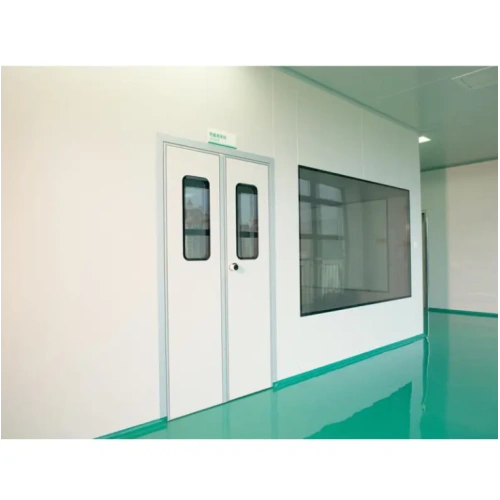
Different from ordinary industrial doors, low-temperature cold storage equipment faces extreme working conditions, making anti-icing and structural safety core assessment indicators of industry standards. Official safety codes clearly stipulate the thermal insulation thickness, anti-crack performance, and opening and closing durability of cold storage door products. Standardized anti-freezing design effectively solves common problems such as door body freezing, track jamming, and seal aging in ultra-low temperature environments. Meanwhile, safety standards mandate obstacle sensing and automatic rebound functions to avoid collision injuries and equipment damage during high-frequency operation. These unified technical requirements eliminate product quality differences in the market and lay a solid foundation for the standardized development of the industry.
Pharmaceutical cold chain storage has put forward higher customized safety requirements for specialized door products, further enriching and improving the industry standard system. A freezer door where medicine is stored needs to meet constant temperature and humidity maintenance standards for pharmaceutical storage, with ultra-high airtightness to ensure stable low-temperature storage environments for vaccines, biological agents, and sensitive medical supplies. Industry safety regulations also require such doors to have anti-aging, explosion-proof, and fire-retardant properties, as well as reliable emergency manual opening devices to ensure rapid evacuation and equipment protection in case of power failure or accidents. The introduction of pharmaceutical-level safety standards has raised the industry’s overall manufacturing threshold and promoted the refinement and high-end development of cold storage door products.
In addition to product performance standards, modern safety specifications also focus on installation, operation, and daily maintenance norms. Industry guidelines require professional standardized installation to avoid air leakage and structural deformation caused by irregular construction. Regular safety inspection, seal replacement, and equipment debugging have also been included in mandatory industry management standards. These full-cycle safety requirements run through the entire service life of cold storage doors, helping enterprises reduce safety hazards, lower failure rates, and avoid economic losses caused by safety accidents.

