

With the rapid expansion of global cold chain logistics, food processing and pharmaceutical refrigeration industries, the demand for specialized low-temperature access equipment continues to rise. Various types of low-temperature isolation doors have been launched on the market to adapt to different freezer scenarios, and their differences in insulation efficiency, operating speed, durability and environmental adaptability directly affect the operational cost and safety of cold storage facilities. A comprehensive performance comparison of mainstream models helps enterprise purchasers and project designers select the most suitable equipment, avoid energy waste and frequent maintenance problems, and realize long-term stable operation of low-temperature storage spaces.
Insulation performance is the core evaluation index for all low-temperature door equipment, especially for facilities that need to maintain ultra-low temperature environments all year round. Traditional industrial rolling doors often have poor sealing and single-layer structures, which cannot resist cold air leakage and external heat penetration. In contrast, professional low-temperature dedicated door products adopt thickened polyurethane thermal insulation layers and multi-layer sealing structures, which greatly reduce temperature fluctuation inside the warehouse. As a core cold chain supporting facility, the Cold Storage Door focuses on static insulation and long-term airtightness, suitable for cold storage areas with low pedestrian flow and low opening frequency. Its stable thermal insulation performance effectively reduces the load of refrigeration units and cuts down daily power consumption, making it cost-effective for conventional fixed cold storage zones.
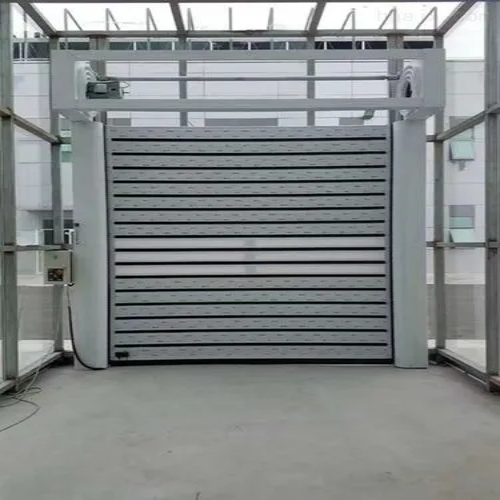
Operational efficiency and passing adaptability are key differences distinguishing different low-temperature door models, especially for high-frequency access scenarios such as logistics sorting and cargo turnover. Many large cold chain hubs need doors that can balance rapid passing and temperature locking, putting forward higher requirements for door body structure and opening methods. The double door freezer configuration is widely used in large-span freezer passages, featuring a double-body synchronous opening and closing design. Compared with single-door structures, it provides wider passing space for forklifts, pallet trucks and large cargoes, improving the efficiency of cargo entry and exit. Although its overall sealing area is larger, the optimized edge sealing design ensures excellent cold insulation effect, making it ideal for high-traffic freezer working areas.
Structural design and scene applicability further divide the performance boundaries of various low-temperature rolling doors, meeting the differentiated needs of commercial and industrial cold storage. Commercial cold storage, supermarkets and temporary refrigeration warehouses have flexible space layouts and diverse usage scenarios, requiring door equipment with strong compatibility and convenient installation. The 2 door commercial freezer supporting rolling door structure is optimized for commercial small and medium-sized freezer spaces. It features lightweight door body design, flexible start-stop operation and low failure rate, which can adapt to frequent short-distance opening and closing in commercial scenarios. Its anti-frost and anti-icing functions are adjusted according to medium and low temperature environments, avoiding the freezing and jamming problems that often occur in ordinary rolling doors.
In terms of durability and maintenance cost, different types of low-temperature rolling doors also show obvious differences. Professional low-speed static insulation doors have simple structures and fewer wearing parts, with lower later maintenance costs, but their low opening speed limits logistics efficiency. High-speed rolling structures for large-span passages focus on operating efficiency, equipped with high-power anti-freezing motors and intelligent sensor systems, which can adapt to 24-hour high-frequency operation, but require regular inspection of sealing strips and transmission parts. Commercial customized models balance performance and cost, with moderate durability and wider market applicability.
In conclusion, each type of low-temperature rolling door has its unique performance advantages and applicable scenarios. Users need to make selections based on actual warehouse span, cargo turnover frequency, temperature requirements and budget. Reasonable matching of door types can not only stabilize the internal temperature of the freezer and ensure the quality of stored goods, but also effectively reduce energy consumption and maintenance costs, bringing stable economic benefits to cold chain operation.

